New Think Creative Home

Tuesday, February 19, 2013

The challenge of social media: You can lead a horse to your marketing, but you can't make him retweet it

At New Think Creative, we recently had a prospective client who decided he didn’t, in fact, need any help with his social media marketing. The reason? His nephew knew how to tweet, so he could handle the business’s social media campaign. (We don’t know the name of the nephew, but we’ve affectionately dubbed him Sheldon. He’s simply adorable.)

You could say this makes us feel the same way a contractor would feel if a home owner told him, “I don’t need to hire you after all, since I just found out I can borrow a backhoe.”


Acquiring the right tools doesn’t always require professional help. Using them is a different story. That is, if you don’t want your nephew Sheldon to accidentally put a hydraulic metal arm through the roof of your car.

Alicia Keys doesn’t get paid because she can sing, and Justin Verlander doesn’t get paid because he can throw a baseball. Almost anyone can do those things. They are valuable because they can sing, or throw a ball, effectively.

Social media is so mainstream, we almost take it for granted that everyone is savvy by now. But as it turns out, many smart, successful businesspeople have yet to fully understand what’s going on. So you have a Twitter account for your business? In 2013? I guess you’re cutting edge now. No further effort required.

Having social media is no longer an edge. It’s a basic requirement. The edge comes when you can use it effectively. It can be just background noise. Or it can be an immediate, intimate way to connect with your customers.

For example, the Oreo cookie brand had a recent social media breakthrough during this year’s infamous Super Bowl blackout. For 34 minutes, the nation was frozen in front of the television, wondering when the Super Dome lights would come back on. Someone decided to act fast. Within those 34 minutes, they gave the Twittersphere something to react to:

Simple. Immediately relevant. Most importantly, it makes people want to tell their friends, “Hey, have you seen this?” And so it was retweeted 16,000 times.

This is the “social” element of social media. You can’t just talk. It has to provoke a reaction. Your customer base needs to enjoy it, seek it out, share it. That doesn’t happen when you just talk at people… but then, I’m sure Sheldon has it all under control. Doesn’t he?


Here are New Think Creative’s 4 golden rules for social media marketing:


1. Be creative. Be out there, outrageous, and buzz-worthy. Just like everyday life, you have to be interesting, enticing, and thought-provoking to get and hold people's attention, and to make them want to pass your content along! Talk their talk. Walk their walk. 
2. Be creative and know that media successes are often the result of well-coordinated effort.  Make sure all your social media messages are creatively conceived, well-orchestrated, and stay on point every time, in every media.
3. Be creative and patient.  Social media is a slow game. Know that every tweet or post won't be perfect.  You are building a community that will come together with varying opinions or points of view. Manage it, but let it breath. Don’t just screw the negatives… learn from them. It’s a great way to make your next tweet or email (or whatever) work better.
4. Be creative. Fire Sheldon. Hire New Think Creative.

Monday, February 4, 2013

Last place is a big victory for this Super Bowl ad

At my Super Bowl party, the early ads failed to draw much attention from my companions. The commercial breaks lacked a certain “Super Bowl atmosphere.” We often talked over them, almost as though they were typical, non-essential breaks in the middle of a television show.

And then… we saw GoDaddy’s spot starring Bar Rafaeli and Danica Patrick.


Everybody stopped talking. We watched in silence.

Everyone HATED it.

Is it offensive? It’s at least awkward. Personally, I just started thinking about what will become of the poor guy who plays “Walter.” It must be rough to live out all your years knowing the undisputed best day of your life is already behind you.

The spot was universally abhorred, finishing dead last onthe USA Today Ad Meter. And therefore, it is potentially a smashing success.

The worst fate for a Super Bowl commercial is to get lost in the shuffle. Seen as mediocre. Ignored, as Super Bowl partygoers choose to discuss Joe Flacco’s passing accuracy instead of paying attention to your spot.

GoDaddy’s shockingly low approval ratings earn extra PR, which equates to more free advertising and name recognition for GoDaddy. Which is really all they want.

Not everyone can get away with this approach. If you’re JP Morgan, looking crass isn’t worth the extra attention. But as someone who has bought a domain name from GoDaddy, I can attest to the fact I don’t need to like them or trust their aesthetic judgments. I just need my brain to remember the name of a business that will get me a domain name. And GoDaddy’s name is out there. Way, way out there.

Monday, January 21, 2013

Getting out of "attack mode" in the social media age


Last week, Janet Lyons wrote me this email about Lance Armstrong:

"I have noticed most of the tweeting that has gone on during his Oprah interview is very negative. Now that could be because he is hateful, or it could be because it is simply more fun to be snarky and negative in the tweeting world."

There was definitely a lot of animosity in the air among people holding strong opinions on Lance Armstrong. I have my own thoughts on Lance, but most people seem to fall into one of two schools of thought:

1. I am angry at Lance Armstrong.
2. I am angry at people who are angry at Lance Armstrong.


Twitter is a pretty effective vehicle for negative thoughts. As forms of communication get shorter (from articles, to blog posts, to microblogging), are we getting meaner? There's a reason why the word "short" can mean "obnoxious." As in, "Why are you getting short with me?"

We all want to be funny and smart. Which makes it tough to remain calm, friendly, and charitable within 140 characters. One-liners tend to be the territory of the insult comic.

I wish I could claim to be innocent of this, but I can see myself gravitating into the same habits. I used to do it in school. If you want to write a paper that's quick and short, just criticize something you read. Proposing new ideas is hard work. Attacking other people is easy. It's really hard to be (1) terse, (2) clever, and (3) POSITIVE at the same time.

After all, short, positive phrases are often attacked as cheesy…


This instinct has carried over into my professional life in advertising. For example, I recently had to write copy for the front of a postcard. The challenge in this assignment was that I had maybe 20 words to get across a pretty complex concept in a clever, amusing way. Queue those natural tweeting instincts. I proposed that the front of the postcard depict someone doing the OPPOSITE of our message. The copy would then cut him down. "Don't be that guy!" was the message.

The idea was quickly rejected by the client. "We're looking for a positive message," was the response.

Ugh, I thought. So I guess we're doing this the hard way.

But this is what the partners for New Think have been doing their whole lives: coming up with short, clever, POSITIVE phrases to describe clients (see: Have It Your Way, We Bring Good Things To Life, We Love To Fly and It Shows, Life Takes Visa). It's easy to be smart when you're tearing something down, whether it's Lance Armstrong or Hot Pockets. It's much harder to be clever while promoting something positively. It’s something that's not taught very often in school these days… and even less often on Twitter.

Wednesday, May 23, 2012

Great internet campaigns make you... stop using the internet for a second.

Yesterday, a particular banner ad caught my eye. It was for an online dating site whose catchphrase was “the offline dating site” (the implication being that you might actually meet someone in person). I Googled it and the reviews said the site’s no good... And yes, I might have otherwise considered using it. Stop judging me.

So no dates for me :-(. But I started thinking about web campaigns that aim to actually get people off the computer (the nicotine gum of websites, if you will). Isn't that the idea though? Depending on the goal of your promotion, customers are going to have to take their face out of the screen at some point.

To that point, I’ve been trying for a while to figure out an excuse to write about one of my favorite concepts in social media campaigns: the alternate reality game. The most famous example is probably I Love Bees, an alternate reality game played in 2004 which was intended to hype the Halo 2 video game.

The phenomenon began when with some viral distribution of the url http://www.ilovebees.com/ (still active!). Purportedly someone’s personal webpage about beekeeping, the site bears all the signatures of amateur web design, right down to the annoying animated .gif of a cartoon bee. But upon visiting the site, it appears to be afflicted by a severely freaky-deeky virus or hack.

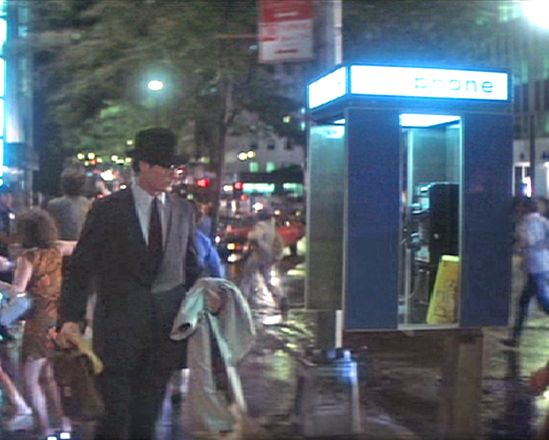
This is the impetus for a radio drama story, told in audio files posted to the site. The plot involves an alien artificial intelligence which is trapped inside the site. The site also gave players a set of global coordinates with no explanation of what they meant. Players discovered that the coordinates referred to the locations of pay phones, and the dates and times when the phones would ring. Players who answered the calls at the prescribed times got the opportunity to speak with story characters, and have their conversations recorded as part of the radio drama. Eventually, the game included Halo plot points and the "winners" were invited to a pre-release party for the game.

How freakin' cool. Everything old is new again, and whether or not you realize it, the coolest thing this century might actually be... pay phones? Well, no. But ironically, the most innovative social media tools of tomorrow's internet might be those which can actually get your face out of a screen in order to have a real life adventure in the "outside" world.

This is an important point to remember regarding the continued survival of movie theaters. With the success of NetFlix and the advancement of home entertainment, no one needs a theater just to see movies. But your house just isn't an adventure. Something needs to get you out.

This is part of the simple appeal behind New Think's "flash screening"promotion for Insidious. Any movie is a movie. But a one-time-only chance to go to a pre-release screening at midnight... Now, that's the adventure.

Today, we have access to everything we want, at the touch of a button, right here in the comfort of our homes. And you know what? It kinda sucks. Find a way to drag people out of their homes, and they just might thank you for it.

Tuesday, May 1, 2012

Pinterest teaches you how to pick up the chicks

Apparently, Pinterest shares a couple of parallels with the hottest nightclub imaginable.  Specifically, (1) you have to wait to get in if you don't already know someone inside, and (2) once you're in, 80% of the people there are women.


When I attempted to sign up for an account, I received this email:
Hi!
Thanks for requesting an invite. We'll be sure to send one soon.
In the meantime, feel free to explore a few pins.
We're excited to get you pinning soon!
—Ben and the Pinterest Team
What the hell are they doing in the meantime???  Every other mass social site creates your account instantly upon a single click.  Are they running a background check, based solely on my e-mail address?

An e-mail confirmation makes sense to confirm that the e-mail I've given is real.  But why the delay?

From The Social Network:
Tyler Winklevoss: The difference between what we're talking about and MySpace or Friendster or any of those other social networking sites…

Mark Zuckerberg: Is exclusivity.

Also consider:
"I don't want to belong to any club that will accept people like me as a member."
---Groucho Marx

Again, from The Social Network:
Eduardo Saverin: People had the ability to invite, or not invite, their friends to join.  See, in a world where social structure was everything, that was THE thing.

Now that Facebook has taken over the world, the "college kids only,” "invite only” structure is out.  Everyone thinks they need a Facebook profile anyway (and you do, don't you?), so there's no need for a manufactured "this club is for cool people only” phenomenon.  But I'm pretty sure the strategy still holds.  Despite Pinterest's supposed obstacles that prevent people from joining up, it has become the quickest growing new social networking site of all time, with about 12 million users.  Some exclusivity, huh?

It's the oldest trick in the book.  You can give something away for free, but no one will want it.  Tell people they can't have it, and suddenly they will pay dearly for it.  If you advertise that your club would like more members, no one will join.  Announce that your club is full, and people will be desperate to get on the "waiting list.”

So now I'm like a pretty girl that's given my phone number out to this cool new guy Pinterest, but I'm not going to get an invite right away.  Cool guys wait before calling you.  Tell ‘em, Trent:


As I know from someone who's already on Pinterest, I'll soon get a couple more e-mails:

From first e-mail:
You're in!
I'm excited to invite you to join Pinterest, a social catalog. I can't wait to have you join our little community.

From second e-mail:
Hi ______!,
YOU are the newest member of Pinterest, a community to share collections of things you love. We're excited to have you as a member and can't wait to see what you pin.
A few tips to get the most out of Pinterest:
[cropped]
- Pin carefully! As one of the first members of Pinterest, your pins will help set the tone for the whole community. Use big images, write thoughtful descriptions, and pin things you really love. Also, no nudity :)
Thanks for joining and happy pinning!
- Ben and the Pinterest Team

This is exciting. I'll be one of the very, very first [12 million or so] inside their little [12 million or so] community!

The internet may have changed the venue and technology of social networking, but social dynamics haven't really changed at all since you were a child.  Ultimately, if you want to be the leader of the Cool Kids Club, you have to make people fight to get inside it.  Hats off to Ben Silbermann and Pinterest for keeping their cool, and not inviting the hot chicks too soon.  I think it's working.

Thursday, April 26, 2012

Too logical to ever happen: combine social marketing with the movie-making process


We're used to the fact that every movie ad and trailer looks exactly the same. That's why we don't even notice that the entire process of movie marketing is pretty much back-asswards.

Or maybe filmmakers, even of the rich big-budget variety, are too sincere to even realize what they've got on their hands. They are too busy shaping their art to give thought, while the movie is being made, to the fact that the movie eventually has to be sold.

Imagine you're producing a potential blockbuster movie. You've got a few big-name actors attached. These people aren't just the biggest thing in movies; they're also the hottest commodity in advertising. They are worth millions just for a 30-second clip of them chugging a soft drink. They each have a million Twitter followers and a legion of fawning gossip junkies who will hang on their every word. They are on set for hundreds of hours, filming their scenes. Then... they go home.

Months later, a marketing department is looking at film footage, thinking, "How do we make a commercial out of this crap?" Meanwhile, the world's greatest attention-grabbers are long gone.

Just to pick a random celebrity endorsement, the first recent one that comes to my head is Salma Hayek for Burger King. Not a particularly great or horrible ad. But if fast food were marketed like movies, their commercials would be directionless. You'd simply film a celebrity eating a salad, then come back to the footage months later and say, "Huh. What do we do with this?"

With a little forethought, movie advertising might have more options than a montage of film clips accompanied by "Solsbury Hill" (even though that's an EXCELLENT freaking song).

In this video from the 2012 Florida Film festival, New Think's Janet Lyons and Mike Campbell detail some advertising strategies from the movie Insidious. Without big-time stars or a big-time budget, the movie received an enormous return from the use of B-roll, interviews, online storytelling, interaction with fans, and footage that was never intended to be part of the movie. The additional content was created as marketing content. Skip to around 38:28 for the most on-point section.


Your favorite movies are probably not something you enjoyed in isolation. You watched them with friends, discussed them, referred back to them. You may have dressed up as a character for Halloween. Maybe certain movies remind you of a poignant moment in your life.

As someone who likes to play poker, Rounders is one of my favorite movies. I enjoy watching it. But just as importantly, it's a great conversation-starter among poker players. It drives social interaction.

What makes Star Wars such an enduring film franchise? It's more than just a few hours of fossilized film from the '70s and '80s, followed more recently by universally-loathed CGI-fests. The series is kept alive by fans who still, to this day, debate the movies and create fan fiction.


Why simply make a movie and then hope for the social phenomenon to happen after its release? Why not create additional material simultaneously with filming, or at least before release? Give movie fans something to talk about. Give them a chance to interact with filmmakers or stars. Let them tell their own stories; after all, they want to be famous too.

Because the best hit movies are really social experiences, movies are the perfect material for social marketing!

But then, you could just make a montage trailer and hope for the best. Your choice.

Monday, April 23, 2012

Sweet new street sign to revolutionize social media?


At the risk of turning this into a sports blog, I have to point out a new favorite among "dumbest attempts to be social media-savvy."

This is the Cleveland Indians' "Social Suite." (Why not "social media suite?" Alliteration? Subtle guilt about the fact that the box adds almost nothing to the Indians' actual social media presence?)

I mean, check out this picture. Somebody in those seats is seriously gonna tweet something killer real soon. How about that lady with the red jacket giving the dirty look to the guys across from her? She's just warming up her fingers under her armpits. Once they unfreeze, she's gonna pull out her iPad and microblog. And it will be totally be Indians-related. Well, OK, how about the guy in front with the drink? Personally, my bet is on the guy creepily hanging out in the doorway. He's going to light up the internet real soon. Either that, or abduct somebody.

As far as I can tell, these are just regular fans sitting behind a sign. They didn't even take time to design a logo for "Social Suite." It's just regular block print under the usual Indians logo.

As far as I can tell, the main feature of the Social Suite is its wi-fi. But they can't call it the "Free Wi-fi Suite." So 2006. Calling it the "Social Media" hot spot is... well, pretty 2010. But that's still a lot closer to the present.

Two serious questions: (1) Why not provide free wi-fi to the whole damn stadium? Plenty of buildings have wi-fi throughout. I imagine it's financially feasible. (2) If your fans are tweeting from their phones, isn't wi-fi unnecessary?

Social media is a means to an end. It's something you use to communicate. What's being communicated here? If you fill out our online application, we might give you free wi-fi for one game? I think I'll pass.